Slab Leak Detection in Tucson, AZ
Warm spots on the floor, a hissing sound, or a meter that moves with everything off. Get connected with local plumbers who find slab leaks without tearing up your home.
Call (520) 654-1036Have your ZIP code ready when you call.
Call 24/7. We connect you with independent local pros serving Tucson and Pima County.
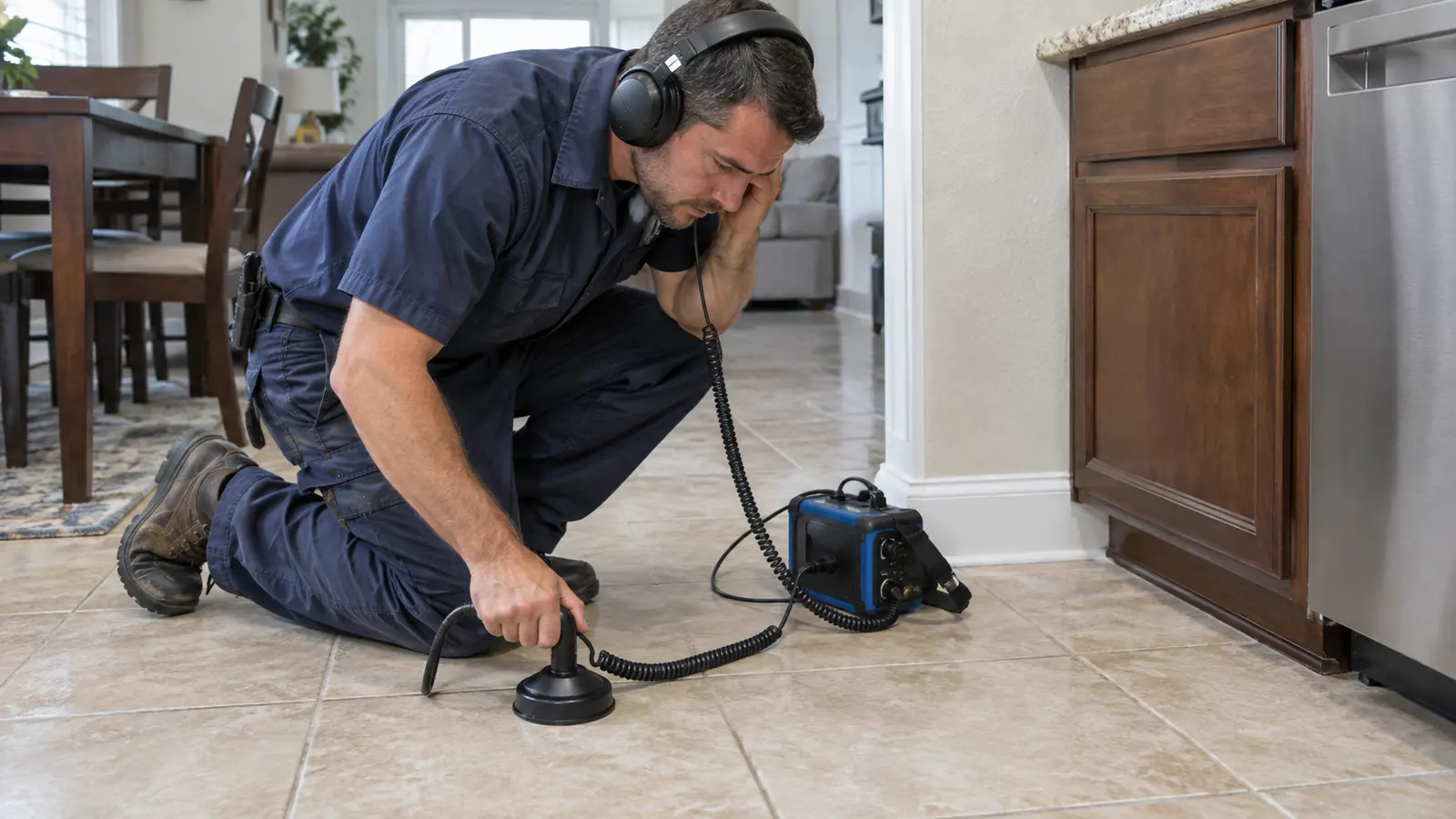
Illustration - not a local job or provider photo
Signs you may have a slab leak
Warm spots on the floor
Warning signs
- A patch of tile or concrete that feels warm to bare feet
- Pets lying on the same spot every day
- Hot water heater running more than usual
The fix
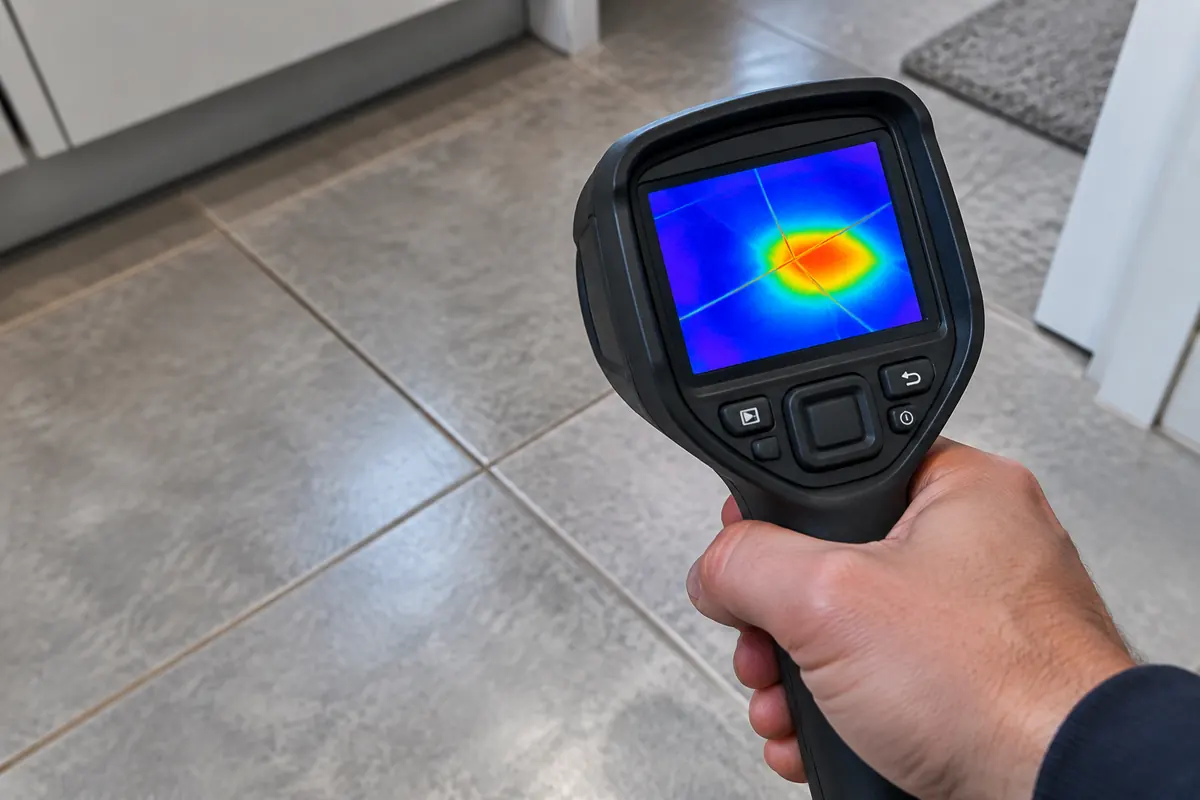
A hot water line leaking under the slab heats the concrete above it. Thermal imaging shows the warm pattern and traces it to the leak point.
Sound of running water
Warning signs
- Hissing or trickling in a quiet house
- Noise near a wall or floor with no fixture in use
The fix
Acoustic ground microphones amplify the sound of water escaping under pressure, so the pro can mark the leak within a small area.
High water bill
Warning signs
- Bill jumps with no change in habits
- Usage keeps climbing month to month
The fix
A pressure test isolates which line is losing water, hot or cold, before anyone looks for the exact spot.
Meter spins with everything off
Warning signs
- All faucets, toilets, irrigation, and appliances off
- Leak indicator on the meter still moving
The fix
This is the clearest sign of a hidden leak. The pro separates house lines from the yard line to confirm it is under the slab.
Damp or damaged flooring
Warning signs
- Cupped wood or loose tile
- Wet carpet or baseboards with no obvious source
- Cracks in the slab or walls
The fix
Moisture meters map the wet area, and the leak is located before any flooring is lifted.
How local pros find the leak without digging
Line isolation and pressure testing
The system is shut down and each line is tested separately to confirm a leak and which side it is on.
Acoustic detection
Sensitive ground microphones pick up the sound of water escaping under the slab and narrow it to a spot.
Thermal imaging
Infrared cameras show heat patterns from hot water leaks through tile and concrete.
Tracer gas when needed
For quiet leaks, a harmless gas mix is pushed through the line and detected where it rises through the slab.
Why Tucson slabs leak
The Tucson basin has expansive clay and hard caliche. Monsoon rain from June 15 to September 30 swells the clay, then months of dry heat shrink it again. The slab moves a little every year, and copper lines set in or under it rub, flex, and wear.
Tucson's hard water adds scale and pitting inside those same pipes. Homes built from the 1970s to the 1990s in areas like the Eastside (85710, 85715), Northwest Tucson (85741, 85742), Casas Adobes (85704), and Catalina Foothills (85718) often have original copper that is now 30 to 50 years old.
Found a leak? Next step: slab leak repair options. Water already on the floor? See water damage restoration. You can also check Tucson-area coverage to review water damage referral availability across Pima County communities (note that water damage coverage does not guarantee plumbing dispatch in every area).
Why slab leaks are common in Tucson
Most Tucson-area houses are built slab-on-grade, with water lines running in or under the concrete floor. The city grew from about 45,000 people in 1950 to about 213,000 in 1960, and building kept going through the decades after. That means a large share of homes now have supply pipes that have been under concrete for 30 to 70 years.
Soil that moves
The Arizona Geological Survey names expansive clay as a major problem soil and publishes a shrink-swell soils map for Tucson. These clays swell when wet, as they do in monsoon season or around a leak, and shrink in the dry heat that follows. Caliche, a hard layer of soil cemented by calcium carbonate, is also common near the surface in the Tucson basin. A pipe held in place by concrete and caliche while the clay around it swells and shrinks can rub, flex, and wear through over time. Once a leak starts, the extra water can make nearby clay swell even more.
Hard water and pipe age
Tucson Water describes its water as hard to very hard. Hardness increases as more Central Arizona Project water is blended with local groundwater. Many older Tucson homes have copper lines under the slab, and pinholes in old copper are a frequent slab leak finding. Homes plumbed from about 1978 to 1995 may have polybutylene, which failed widely across the country. Newer homes more often use PEX, which is usually routed differently. Tell the plumber the year your home was built and any past leaks or repairs.
Signs of a slab leak
- A warm or hot spot on tile or concrete floors, often a sign of a hot water line leak.
- The sound of running water when every fixture is off.
- Your water meter keeps moving after you shut off all fixtures, the cooler, and irrigation.
- Damp carpet, cupping wood floors, or loose tile with no leak above.
- The water heater running much more than usual.
- New cracks in floors or walls, or mildew smell along baseboards.
- A water bill that jumps with no change in use. Tucson Water advises customers with an unexplained high bill to check for a leak on their property.
How a slab leak is pinpointed
- Meter and isolation test. The pro confirms flow at the meter, then isolates hot from cold to see which side is leaking.
- Pressure test. Each line is tested to confirm it is losing pressure.
- Acoustic listening. Ground microphones pick up the sound of water escaping through the concrete.
- Thermal imaging. Hot line leaks often show as a warm pattern on the floor.
- Line tracing. The pipe route under the slab is traced so the leak can be marked on the floor.
Once the spot is marked, the repair options are spot repair, reroute, or repipe. See slab leak repair in Tucson for how they compare.
What to do first
- Run the meter test Tucson Water recommends: turn everything off, watch the meter or blue triangle for 15 to 30 minutes, then close the house valve and check again.
- If you suspect a hot line, the plumber may ask you to close the cold supply valve at the water heater to slow the leak until it is found. Follow the water heater maker's instructions before shutting off its power or gas.
- If the leak is large, close the main shutoff.
- Note where floors feel warm and take photos. Pull back rugs so damp spots can dry and be seen.
- If flooring or walls are wet, look into water damage drying in Tucson early.
Related Tucson leak guides
- Water leak repair in Tucson: fixing leaks at supply lines, fittings, hose bibs, water heater lines and irrigation.
- Leak detection in Tucson: finding hidden leaks in walls, ceilings, yard lines, irrigation and pools.
- Slab leak repair in Tucson: spot repair, reroute, repipe and lining compared.
- Water damage restoration in Tucson: extraction and drying when water has already spread.
- Tucson-area service areas: towns and ZIP codes across Pima County.
Water damage restoration by town: Oro Valley, Marana, Sahuarita, Vail, Green Valley, Catalina Foothills
Frequently Asked Questions
Why are slab leaks so common in Tucson?
Expansive clay and caliche move the slab, hard water wears copper from the inside, and many homes built in the 1970s to 1990s still have their original copper under the concrete.
Does detection mean breaking up my floor?
No. Detection is non-invasive. Concrete is only opened for the repair, and the goal of good detection is to keep that opening small.
How accurate is acoustic leak detection?
An experienced tech can usually mark the leak within a foot or two. Accuracy depends on the leak, the flooring, and background noise.
Is a slab leak an emergency?
A hot water slab leak or visible water should be handled right away. Water under a slab can erode soil, damage flooring, and raise your bill every day it runs.
Why does Tucson have so many slab leaks?
Most homes are built on concrete slabs with water lines below, the area has expansive clay and caliche soils that move and hold pipes rigid, Tucson Water is hard to very hard, and many homes still have original copper lines.
Is a warm spot on my floor a slab leak?
It can be. A warm area on tile or concrete is a common sign of a hot water line leaking under the slab, especially if the water heater is running more than usual. A plumber can confirm with pressure, acoustic, and thermal tests.
Talk to a local pro now
Nights, weekends, and monsoon storms included.
Call (520) 654-1036Have your ZIP code ready when you call.