Leak Detection in Tucson, AZ
Stains on the ceiling, a soggy patch in the yard, or a water bill that keeps climbing. Get connected with local plumbers who find leaks with minimal damage.
Call (520) 654-1036Have your ZIP code ready when you call.
Call 24/7. We connect you with independent local pros serving Tucson and Pima County.
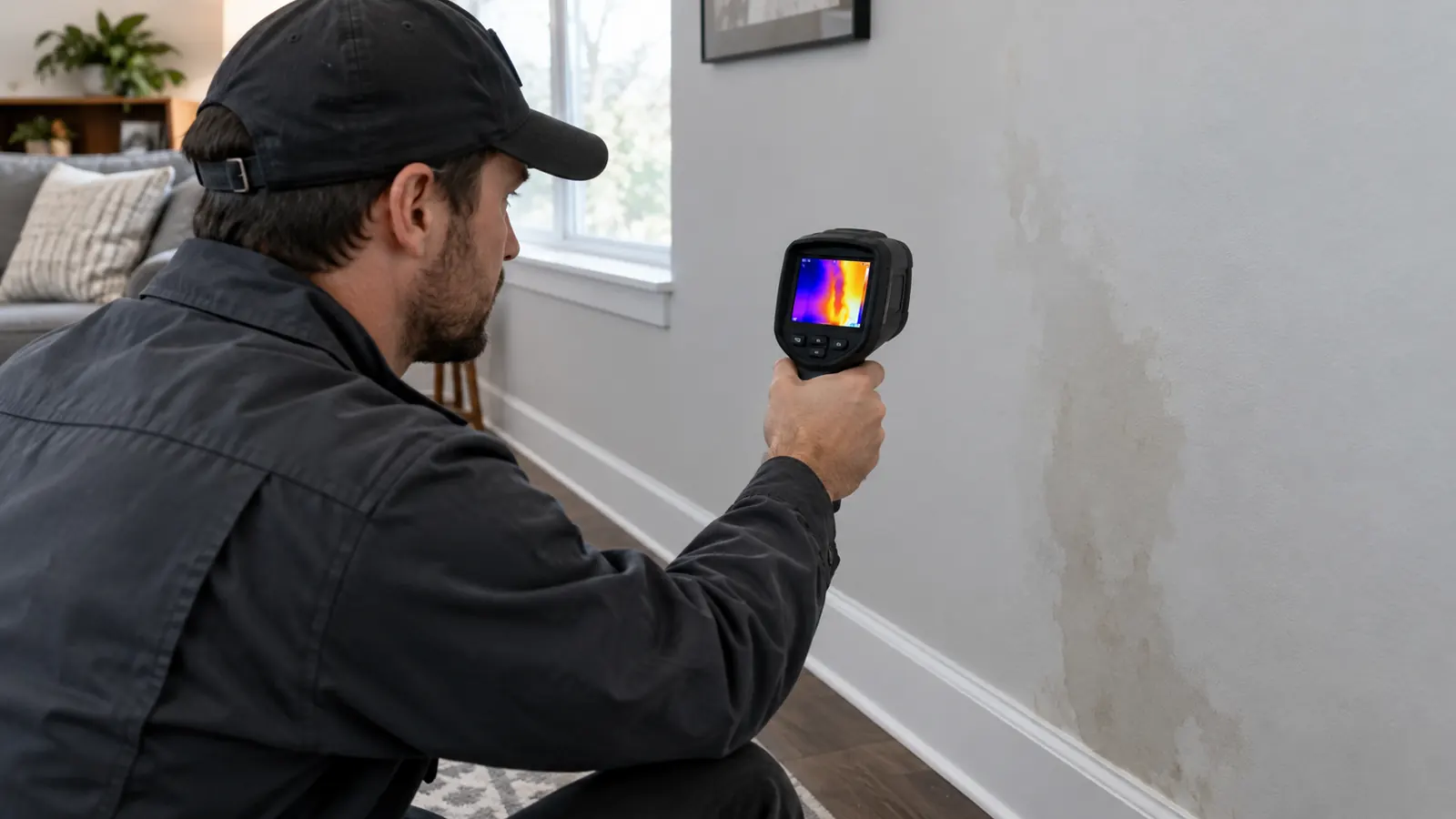
Illustration - not a local job or provider photo
Where leaks hide and how they get found
Leaks inside walls
Warning signs
- Stains or bubbling paint
- Soft drywall near a bathroom or kitchen
- Musty odor or baseboards pulling away
The fix
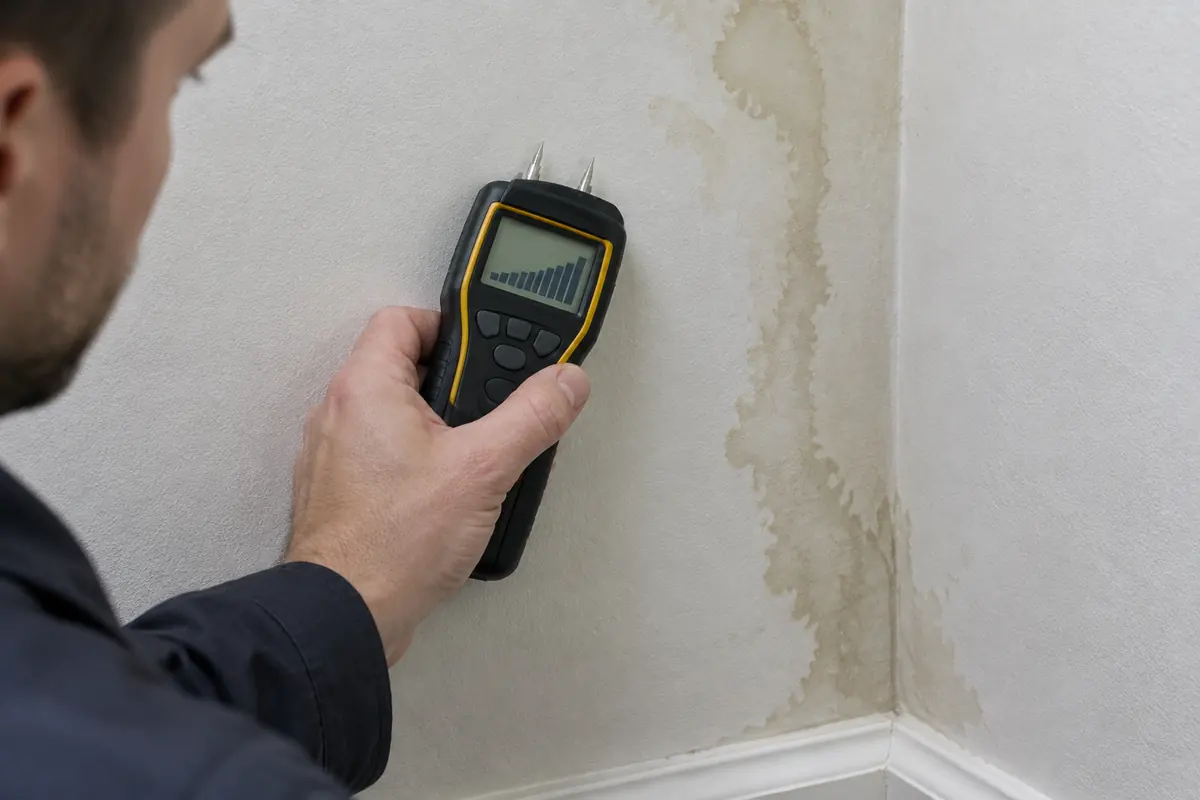
Moisture meters and thermal cameras trace the wet area to the pipe, fitting, or drain behind the wall, so only a small section is opened.
Ceiling leaks
Warning signs
- Brown rings on the ceiling
- Dripping from light fixtures
- Stains below a bathroom or AC unit
The fix
The pro checks upstairs plumbing, attic lines, roof penetrations, and evaporative cooler or AC lines, then isolates the source.
Yard and main line leaks
Warning signs
- Green or soggy patch in a desert yard
- Sinkhole or wet soil near the meter
- Low pressure throughout the house
The fix
The main line between the meter and house is pressure tested and located acoustically, then repaired or replaced.
Irrigation and pool leaks
Warning signs
- Drip system zones always wet
- Pool losing more than evaporation
- Water at the street after the system runs
The fix
Zones are tested one at a time. Pool leaks are checked with dye and pressure tests on the lines and shell.
Why leak detection matters in Tucson
In Tucson's dry air, a leak inside a wall can run for weeks before a stain shows. Hard water pits copper lines, and ground movement from expansive clay can crack main lines and yard pipes. Homes in areas like Midtown (85716), the Eastside (85710, 85730), Oro Valley (85737), and Green Valley (85614) built from the 1970s to the 1990s are especially prone as their original plumbing ages.
Leak under the floor? See slab leak detection. Water already spread? See water damage restoration. You can also check Tucson-area coverage to see water damage referral availability across Pima County communities (note that water damage coverage does not guarantee plumbing dispatch in every area).
Tucson conditions that cause hidden leaks
Hard water from Tucson Water
Tucson Water describes its supply as hard to very hard. Local groundwater is naturally high in calcium and magnesium, and the city notes that hardness rises as a larger share of Central Arizona Project (CAP) Colorado River water is blended in. Since the Clearwater facility began delivering recharged and recovered CAP water in May 2001, that blend has been Tucson's main drinking water supply. Hard water leaves scale inside water heaters, fill valves, cartridges, and supply lines. Scale and mineral pitting are a common reason fixtures and copper lines start to weep years before you would expect. Tucson Water publishes an address lookup on its water quality page that lists grains per gallon for your area, which is useful when setting a softener.
Expansive clay and caliche
The Arizona Geological Survey lists expansive (shrink-swell) clay as one of the main problem soils in the state and publishes a shrink-swell soils map of Tucson from the Natural Resources Conservation Service. These clays swell when monsoon rain or a leak wets them and shrink again in dry heat. Much of the Tucson basin also has caliche, a layer of soil cemented by calcium carbonate, close to the surface. Research from the University of Arizona has long described caliche as a challenge for excavation and for even support under structures. Soil that moves while pipe stays rigid puts stress on buried service lines, yard lines, and pipes under the slab.
Older homes and aging plumbing
Tucson grew from about 45,000 residents in 1950 to about 213,000 in 1960, and most homes built in that boom and in the decades after sit on concrete slabs with water lines in or under the floor. Many homes from the 1950s through the 1990s still have original copper. Some homes from about 1978 to 1995 were plumbed with gray polybutylene pipe, a material with a nationwide record of failure. Newer homes are more often plumbed with PEX. Knowing your home's age and pipe type helps a plumber decide where to look first.
Desert-specific leak sources
Tucson Water's own list of places leaks happen includes the service line from the meter to the home, toilets, evaporative coolers, irrigation systems, water heaters, pools, spas, and water treatment systems. Evaporative cooler supply lines and float valves on the roof, drip irrigation lines buried in desert landscaping, and pool lines are common Tucson sources that people overlook because the water evaporates or soaks into dry soil before anyone sees it.
How to check for a leak with your water meter
Tucson Water recommends starting at the meter. It is usually in the ground near the front curb or in the alley.
- Turn off every faucet and every appliance that uses water, including the evaporative cooler, the refrigerator ice maker, irrigation, and any pool autofill.
- On an analog meter, note where the needle is, or watch the small blue triangle, which spins with very low flow. On a digital meter, look at the flow rate screen.
- Check again after 15 to 30 minutes. If the needle moved or the flow rate is anything but zero, water is going somewhere.
- Turn off the house shutoff valve and check again. If the meter still moves, the leak is probably in the line between the meter and the house. If it stops, the leak is probably inside the house or under the slab.
Tucson Water cannot locate leaks on private property, but after you follow these steps you can ask it for a High Bill Investigation to make sure the meter itself is not leaking. The City of Tucson notes that homeowners are responsible for the water line from the utility connection to the home. If you are served by another provider, such as Oro Valley Water Utility or Metro Water, check that provider's rules.
What to do first when you suspect a leak
- Find your main shutoff valve before you need it, and close it if water is visibly spreading.
- If the floor feels warm in one spot or the water heater runs nonstop, the leak may be on the hot side. See slab leak detection in Tucson.
- Take photos of stains, wet spots, and your meter readings with the time. They help the plumber and any insurance claim.
- Turn off irrigation and the cooler while you narrow things down so they do not hide or add to the flow.
- If water has soaked drywall, carpet, or cabinets, drying should start quickly. See water damage restoration in Tucson.
Related Tucson leak guides
- Water leak repair in Tucson: fixing leaks at supply lines, fittings, hose bibs, water heater lines and irrigation.
- Slab leak detection in Tucson: confirming and pinpointing a leak under a concrete slab.
- Slab leak repair in Tucson: spot repair, reroute, repipe and lining compared.
- Water damage restoration in Tucson: extraction and drying when water has already spread.
- Tucson-area service areas: towns and ZIP codes across Pima County.
Water damage restoration by town: Oro Valley, Marana, Sahuarita, Vail, Green Valley, Catalina Foothills
Frequently Asked Questions
Who is responsible for a leak between the meter and my house?
In most cases the homeowner is responsible for the line from the meter to the house. The water utility is usually responsible for the meter and the line on the street side. Check with your water provider to confirm.
How can I check for a leak myself?
Turn off every faucet, toilet, appliance, and irrigation zone, then watch the leak indicator on your water meter for 15 minutes. If it moves, water is going somewhere.
Can you find a leak without opening walls?
Usually the leak can be pinpointed with acoustic and thermal tools first, so only a small, targeted opening is needed for the repair.
What if the leak is under my slab?
See our slab leak detection page. Slab leaks are common in Tucson because of shifting clay soil, hard water, and aging copper.
Does Tucson hard water cause leaks?
Tucson Water classifies its water as hard to very hard. Hardness does not make water unsafe, but scale builds up in water heaters, valves, and fixtures, and many Tucson plumbers see it as one factor in early wear on fittings and copper lines.
What leak sources are easy to miss in Tucson homes?
Evaporative cooler lines on the roof, buried drip irrigation, pool and spa lines, and the service line between the meter and the house. Tucson Water lists all of these among common leak locations.
Talk to a local pro now
Nights, weekends, and monsoon storms included.
Call (520) 654-1036Have your ZIP code ready when you call.